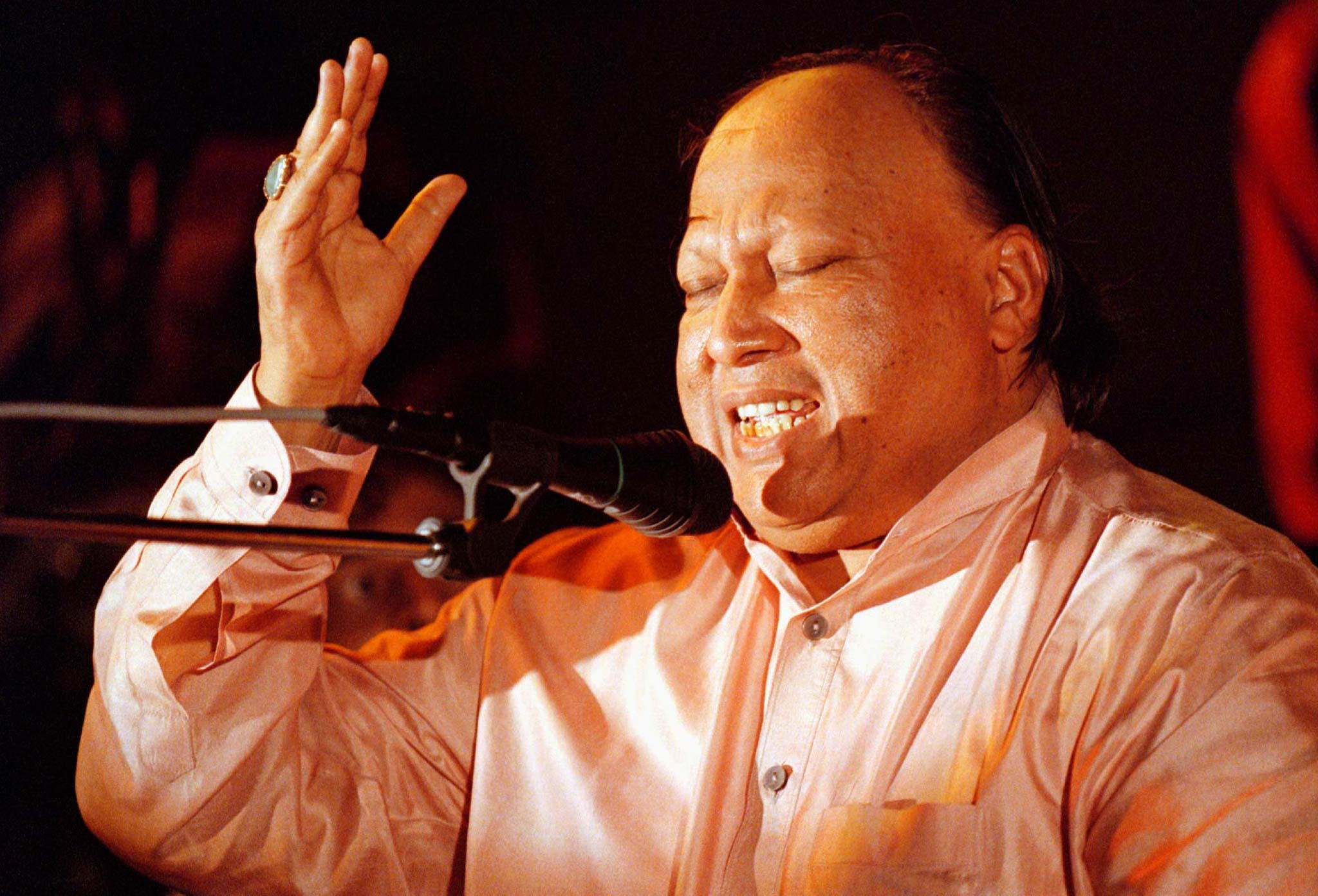
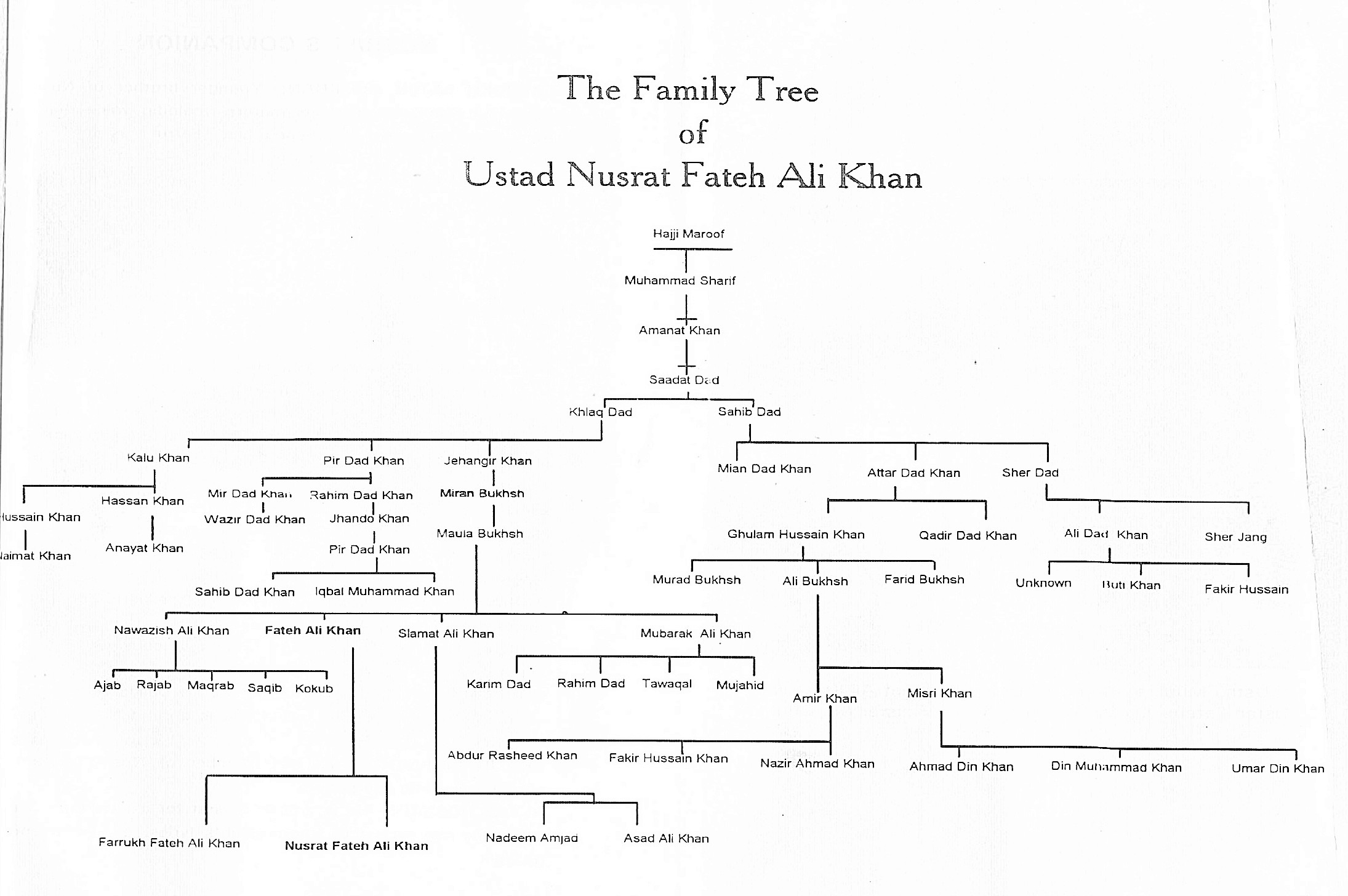
Nusrat Fateh Ali Khan was born in 1948 in Faisalabad, in the Pakistani province of Punjab. He was a member of a family whose male descendants had specialized in the performance of religious music qawwali for over 600 years. The music developed on the basis of Sufism—the mystical trend of Islam. The essence of qawwali is prompting a religious trance enabling direct contact with God.
Musical Heritage
Nusrat Fateh Ali Khan’s father, a great master of qawwali and respected musicologist, taught his son the basics of this music and passed on the knowledge of classical Hindu ragas and the Indian art of vocal khyal based on improvisation. Talented and divinely gifted, Nusrat Fateh Ali Khan contributed to the popularization and development of qawwali by combining all these musical genres.
The Greatest Voice
Even before his death, Nusrat reached the status of the greatest voice of the Indian subcontinent. His voice, covering 5 octaves, became recognizable in Bombay, northern Afghanistan, remote villages of western Baluchistan, and Bangladesh.
His concerts—often lasting many hours—were filled with excited audiences who paid no attention to the religious differences of other listeners, which even now is an exception among Muslims from Pakistan and Hindus from India. Nusrat’s music was not limited to India and Pakistan; it won the recognition of the Western world and built a bridge between Eastern and Western civilizations.
International Success
Nusrat recorded more than 120 albums for various record companies in Pakistan, India, Europe, Japan, and the United States. He was the most important and influential artist at Peter Gabriel’s Real World Records.
He collaborated with many well-known artists, including:
- Asian Dub Foundation
- Eddie Vedder (Pearl Jam)
- Massive Attack
- Michael Brook
His voice can be heard in famous films:
- “The Last Temptation of Christ” by Martin Scorsese (final crucifixion scene)
- “Natural Born Killers” by Oliver Stone
- “Dead Man Walking” by Tim Robbins
- “Bandit Queen” by Shekhar Kapur
Divine Connection
Muslims living in Pakistan are still convinced that during his concerts, Nusrat Fateh Ali Khan in trance had direct contact with God. Japanese and Zulu people, so distant in culture and religion, attribute divine qualities to Nusrat, calling him “Little Buddha” or “Unkulunkulu” (God-Man).
Although Nusrat died in 1997, many of them believe that their beloved artist is still alive through his music…

In His Own Words
“A man learns all his life, and dies the day he thinks that he has learnt everything.”
“Oh myself, I am but a courier, carrying on melody’s wings, missives with the name and message of God. With the brushstrokes of my voice, images of peace I paint on air.”
— Nusrat Fateh Ali Khan
What is Qawwali?
Qawwali, deriving from the Sufi music tradition of Pakistan, India, and the Middle East, is a religious song accompanied by vigorous rhythmic clapping and tabla (percussion instrument), with the melody of harmonium—a kind of small organ.
A qawwali ensemble consists of 10-14 members seated on stage during performance. The group is led by the voice of the leader, while several voices create a chorus repeating the leader’s phrases. The repeated chanted phrases, the rhythm of tabla, beautiful harmonious melodies, and the mysticism of the sung poetry are designed to make listeners fall into a musical trance, enabling contact with God.
Continue reading: Early Life →
