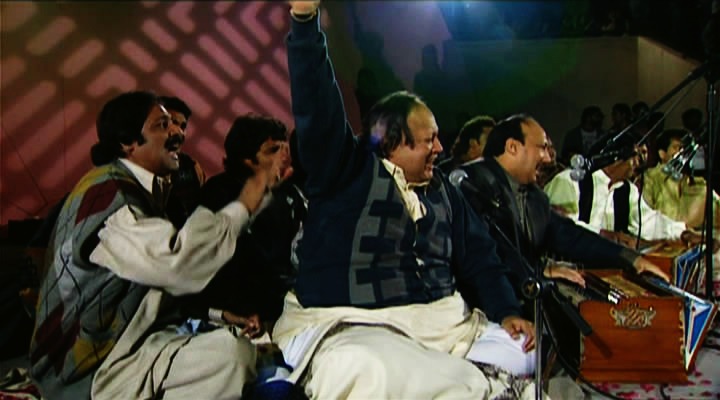
Traditional Beginnings
Nusrat continued to perform qawwali in religious rites—the original form in which qawwali is sung—at mausoleums of revered saints in Pakistan, while simultaneously giving concerts at more conventional venues.
The Ajmer Honor
In 1979, he was accorded the rare honor of performing inside one of the most prestigious shrines in the subcontinent: the shrine of Sufi Saint Moinuddin Chishti in Ajmer, India. This was a recognition of his extraordinary spiritual connection to the qawwali tradition.
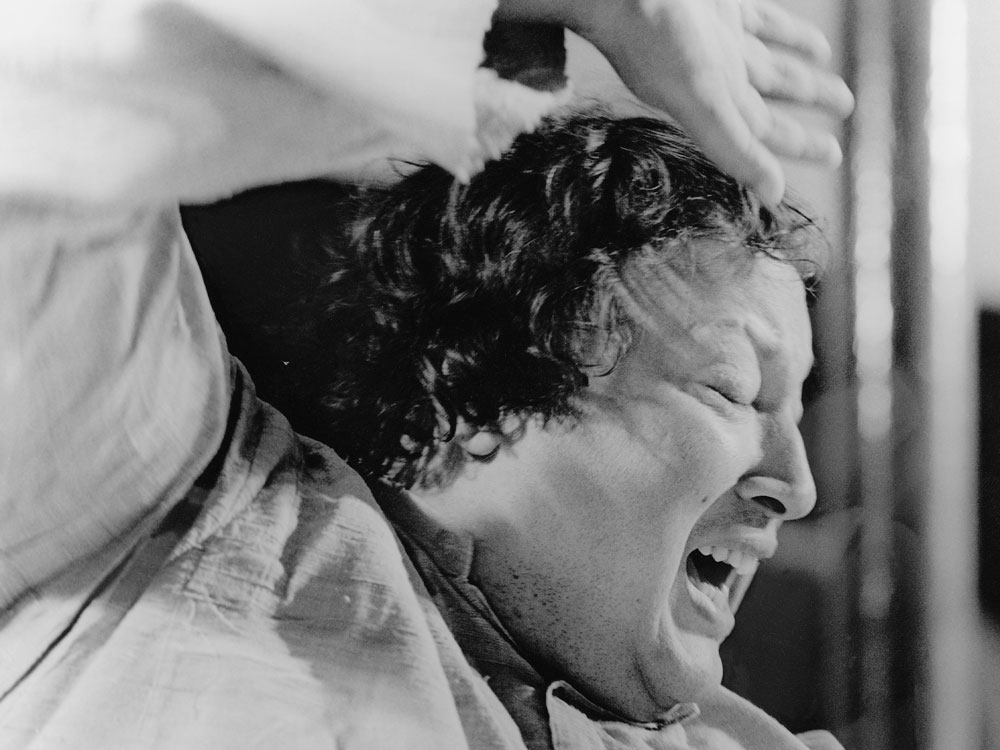
Mastery of Languages
The superb singing talent and musical skill of this great master of qawwali, along with his strong command of multiple languages, enabled him to sing mystic poetry with unparalleled fluency and expressiveness:
- Urdu — The language of classical ghazals
- Farsi (Persian) — The language of Sufi poetry
- Punjabi — His native tongue, perfect for folk qawwalis
He was also famous for his unparalleled repertoire, which extended to several thousand songs.
National Recognition
In appreciation of his excellence, the Government of Pakistan awarded him the President’s Pride of Performance in Art in 1987—the highest civilian honor for artistic achievement.
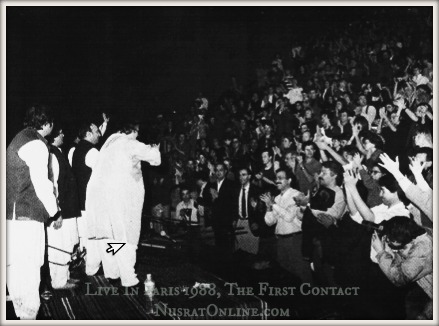
The Signature Style
What made Nusrat unique was his ability to:
- Improvise endlessly — His alaaps and sargam passages could extend for 20-30 minutes
- Control dynamics — From whisper-soft devotion to thunderous celebration
- Connect emotionally — Making audiences weep, dance, and enter states of ecstasy
- Blend traditions — Seamlessly mixing classical ragas with qawwali rhythms

Continue reading: Journey to the West →
