“He was always your son first.”
— Farrukh Fateh Ali Khan to Nusrat, when asked to give Rahat to him as a son
The Successor
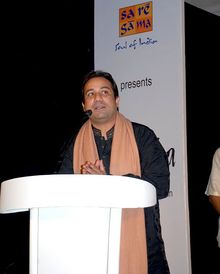
Rahat Fateh Ali Khan (born December 9, 1974) is the living torchbearer of the Khan family’s 600-year Qawwali tradition. As the nephew and pupil of Ustad Nusrat Fateh Ali Khan, he was groomed from childhood to carry forward the legacy of the “Shahanshah-e-Qawwali.”
He is the:
- Son of Farrukh Fateh Ali Khan (the Harmonium King)
- Nephew and student of Ustad Nusrat Fateh Ali Khan
- Grandson of Ustad Fateh Ali Khan
Early Years with the Party
Rahat was born in Faisalabad, Punjab, Pakistan, into the heart of the legendary Qawwal family. From a very young age, he was trained by his uncle Nusrat in the art of classical music and Qawwali.
He gave his first public performance at the age of just ten or eleven, when he toured the UK with his uncle in 1985. During this tour, he performed solo songs in addition to singing with the Qawwali party:
- At a concert in Birmingham on July 27, 1985, he performed the solo ghazal “Mukh Tera Sohneya Sharab Nalon Changa Ae”
- At the Harrow Leisure Centre in 1985, he performed “Gin Gin Taare Lang Gaiyaan Rattaan”
Training Under the Master
In a tearful moment, Nusrat asked Farrukh to give Rahat to him as a son. Farrukh replied simply: “He was always your son first.”
This selfless act by Farrukh allowed Rahat to be raised and trained directly by his uncle. Nusrat personally taught Rahat the intricate nuances of Qawwali—the breath control, the improvisation, the spiritual connection—ensuring that his protégé would be ready to carry the torch.
Rahat spent countless hours learning at the feet of the master, absorbing not just the technical aspects of the music but also the spiritual essence that made Nusrat’s performances transcendent.
International Collaborations
Even in a subordinate role with his uncle, Rahat contributed to landmark projects:
- Dead Man Walking Soundtrack (1995) – Working with Eddie Vedder of Pearl Jam
- The Four Feathers Soundtrack (2002) – Collaborating with composer James Horner
- Joyful Noise (2002) – Guesting with The Derek Trucks Band on “Maki Madni”
- Apocalypto Soundtrack (2006) – Featured vocals in Mel Gibson’s film
Taking Over the Mantle
After Nusrat’s passing in August 1997, the family asked Rahat to take over leadership of the Qawwali party. With his father Farrukh’s continued support on harmonium, Rahat began his journey as the new leader.
He has since become one of the most celebrated artists in the subcontinent:
- Bollywood Playback Singer – Debuted with “Mann Ki Lagan” in Paap (2004), followed by countless hits
- International Tours – Performing at venues like Wembley Arena and Manchester Arena to over 20,000 people
- Pakistani Anthems – Recording nationalistic songs like Dharti Dharti and Hum Pakistan
The Voice of a New Generation
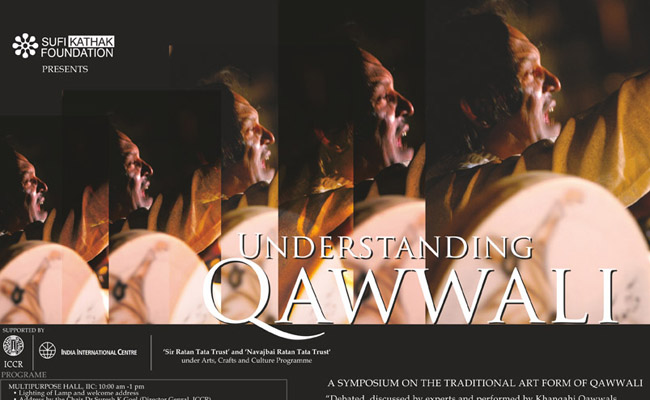
While Rahat has expanded into Bollywood playback singing and contemporary music, he has never abandoned his Qawwali roots. He continues to perform traditional Qawwali at shrines and concerts, keeping alive the devotional spirit that defined his uncle’s art.
His voice carries the unmistakable Khan family timbre—powerful yet tender, technically brilliant yet spiritually grounded. In him, the legacy of six centuries finds its contemporary voice.
Awards & Recognition
- Multiple Filmfare Awards for Best Playback Singer
- Lux Style Awards in Pakistan
- Nominated for various international music awards
- Honored as the successor of the greatest Qawwali tradition
Learn more about the legendary ensemble
Explore The Ensemble →